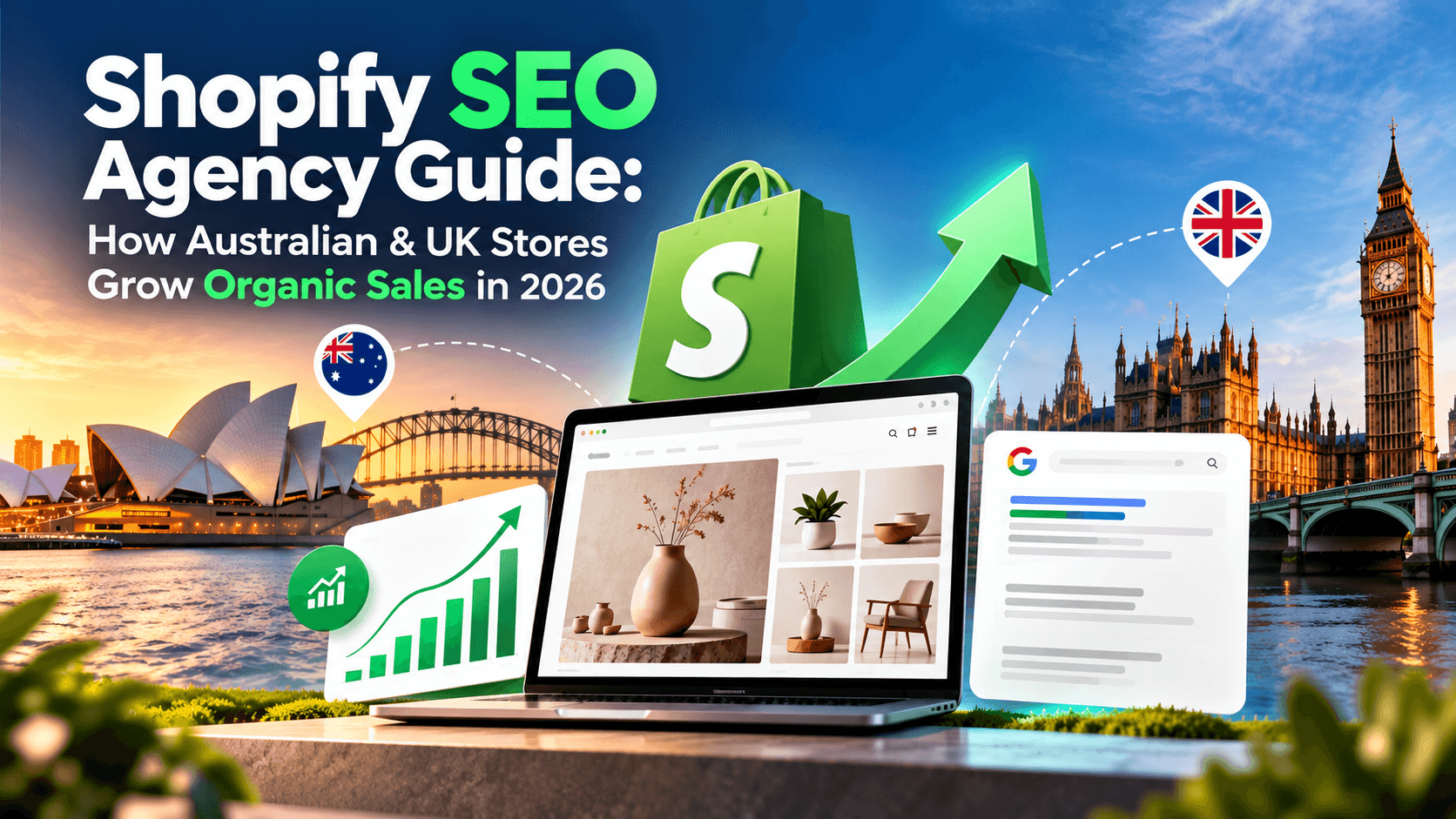
Shopify SEO Agency Guide: How Australian & UK Stores Grow Organic Sales in 2026
Shopify gets a store online in an afternoon. What it does not do is make that store easy to find. Thousands of Australian and UK merchants launch every month on near-identical themes, and the ones that keep growing without constantly raising their ad budget are the ones that treat organic search as a sales channel in its own right.
This guide covers what a good Shopify SEO agency actually does, the platform quirks that quietly hold stores back, and how the approach differs when you are selling to Australia, the United Kingdom, or both.
Why Shopify SEO Is Different
Shopify handles a lot of SEO basics for you, including SSL, a sitemap and clean mobile themes. But the platform also creates its own recurring problems:
-
Duplicate product URLs. A product can be reachable
through both
/products/and/collections/.../products/paths. Most themes set canonical tags correctly, but customised themes often break this. -
Fixed URL structures. You cannot remove
/products/or/collections/from URLs, so titles, handles and internal links carry more of the load. - App bloat. Every review widget, pop-up and upsell app adds scripts. Over time this drags down page speed, which affects both rankings and conversion.
- Thin collection pages. Many stores publish collections as a bare grid of products with no supporting copy, which gives search engines very little to work with.
1. Get the Technical Foundations Right
Before writing a single new page, a proper audit looks at crawlability, indexing and speed. Google's own SEO Starter Guide is a useful reference for the fundamentals, and PageSpeed Insights will show how your store performs on real devices.
- Check that canonical tags point to the main product URL.
- Remove or noindex thin tag and filter pages that dilute your crawl budget.
- Fix redirect chains and 404s left behind by discontinued products.
- Compress images and lazy-load anything below the fold.
- Audit installed apps and remove any that no longer earn their load time.
2. Build Collection Pages That Can Rank
Collection pages usually target your highest-volume, highest-intent searches, such as "women's running shoes" or "organic dog treats". They deserve more attention than any other page type on the store.
- Write a short, genuinely useful introduction explaining what the collection covers and how to choose between options.
- Add a second block of content below the product grid for buying advice and related questions.
- Link to closely related collections so both customers and crawlers can move sideways through the store.
- Use one clear H1 that matches how people actually search.
3. Write Product Pages That Beat Manufacturer Copy
If your description is copied from the supplier, dozens of competitors are using identical text. Unique descriptions that answer real buyer questions around sizing, materials, care, compatibility and delivery tend to rank better and convert better.
4. Add Structured Data and Reviews
Product, review and offer schema help search engines understand price, availability and ratings, and can earn rich results with star ratings directly in the listing. Genuine customer reviews also add fresh, unique content to product pages over time. Only mark up reviews that are real and visible on the page, as Google's guidelines are strict about this.
5. Australia vs the UK: What Changes
Selling into both markets is common for Shopify merchants, and the differences go beyond currency.
- Currency and tax display. Australian shoppers expect AUD prices with GST clearly handled. UK shoppers expect GBP with VAT included. Shopify Markets can manage this, but it needs to be set up deliberately.
- Regional targeting. If you run separate regional versions of the store, hreflang signals tell Google which version to show to which country. Without them, the wrong storefront can appear in results.
- Delivery and returns. Clear shipping times, costs and returns terms for each country reduce abandoned carts, and they are a trust signal for search too.
- Payment options. Buy-now-pay-later options such as Afterpay (branded Clearpay in the UK) are familiar in both markets, and showing them on product pages can support conversion.
- Language and search terms. Both markets use British-style spelling, but product vocabulary still differs. Keyword research should be done per country rather than assumed to carry across.
6. Support Organic Growth With Content
Buying guides, comparison articles and care instructions capture shoppers earlier in the journey and link naturally to your products. Our guide to ecommerce SEO services covers how product, category and technical work fit together, and our article on conversion rate optimisation explains how to turn the extra traffic into orders.
7. Connect Online and In-Store Promotions
If your Shopify brand also trades from a shop, market stall or pop-up, screens at the counter can reinforce the same offers running online. A cloud tool like DisplayManagerPro lets you update in-store displays from any device, so your window promotion always matches the current campaign.
How Long Does Shopify SEO Take?
Technical fixes can lift performance within weeks, but meaningful growth in rankings and organic revenue usually builds over several months. We cover realistic expectations in more detail in our post on how long SEO takes. Be cautious of any agency that guarantees a specific position on Google.
What to Ask a Shopify SEO Agency
- Which parts of the audit are Shopify-specific, rather than a generic website checklist?
- How do you handle duplicate URLs, faceted navigation and app bloat?
- Can you show before-and-after data from a similar store?
- How will you report progress, and on which metrics?
- What support continues after the initial work is done?
Final Thoughts
Shopify SEO rewards patience and fundamentals. Clean technical foundations, collection pages with real content, product pages written for buyers, and market-specific setup for Australia and the UK add up to a store that earns traffic month after month instead of renting it.
Creative Elements works with Australian, UK and international merchants on Shopify store setup and search engine optimisation, with transparent pricing and support that continues after launch.
Want a Shopify SEO audit for your store?
Get a Free Shopify SEO Audit →