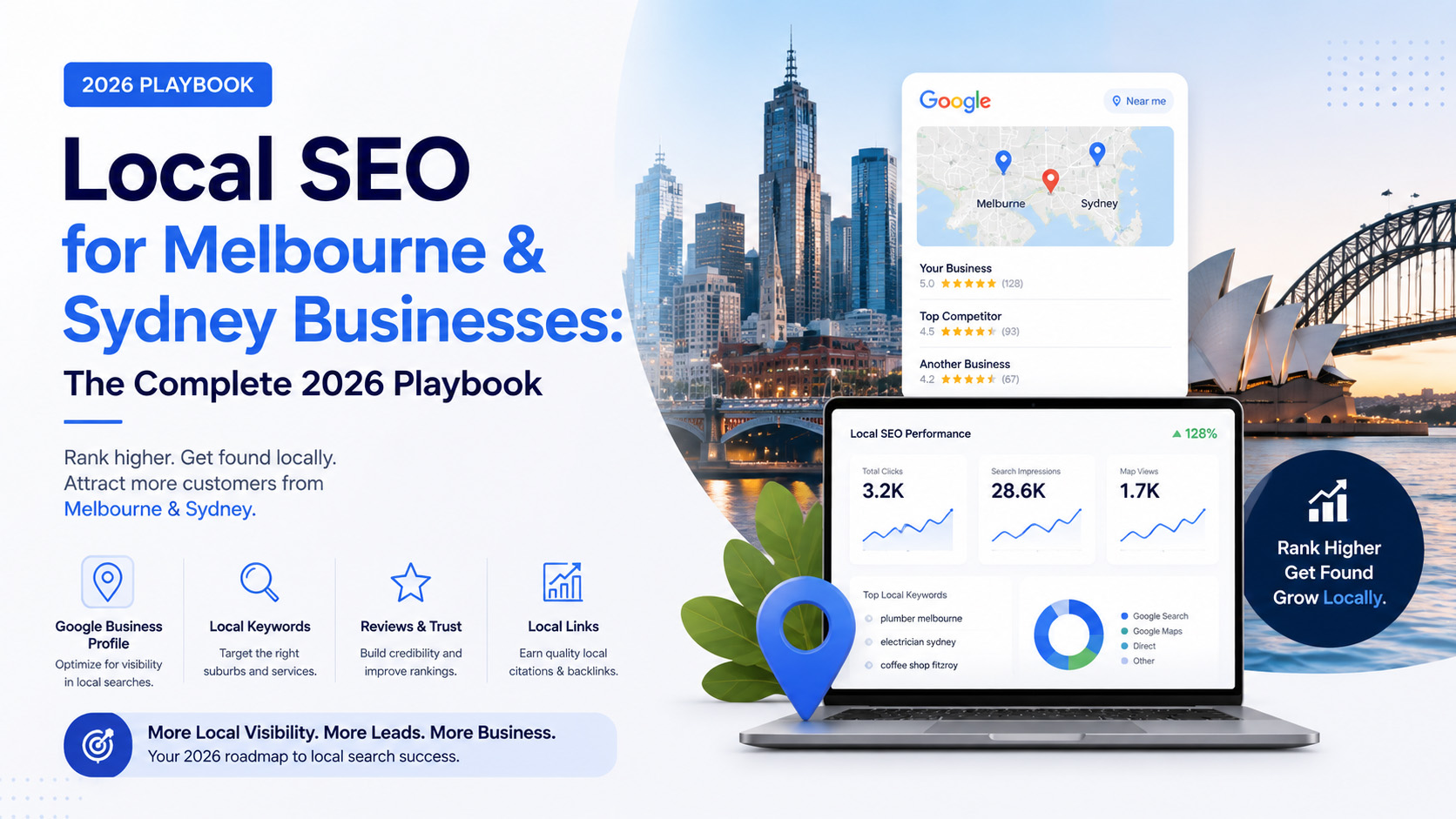
Local SEO for Melbourne & Sydney Businesses: The Complete 2026 Playbook
When someone searches "cafe near me" or "plumber Melbourne" on their phone, Google isn't just ranking websites — it's ranking businesses based on a specific set of local signals. Get those signals right, and you show up in the map pack and local results that capture the most ready-to-buy searches. Get them wrong, and it doesn't matter how good your website looks — you simply won't be found.
This playbook breaks down exactly what local SEO involves in 2026, in the order that tends to produce results fastest for Melbourne and Sydney businesses.
Step 1: Claim and Fully Optimise Your Google Business Profile
Your Google Business Profile (formerly Google My Business) is the single highest-impact local SEO asset you have. It's what populates the map pack, the business panel, and most local search results.
- Complete every field — category, hours, service area, attributes, and a detailed business description.
- Add real photos regularly — of your storefront, products, team, and completed work, not stock images.
- Use Google Posts — short updates about offers, events, or news keep your profile active in Google's eyes.
- Answer the Q&A section — proactively adding common questions and answers builds trust and relevance.
Step 2: Build Location-Specific Content
Generic homepage copy rarely ranks well for local searches. Businesses that perform best in Melbourne and Sydney searches typically have dedicated content for each suburb or service area they operate in — genuinely useful pages, not thin copies with the suburb name swapped in.
This might mean a dedicated landing page per location for multi-branch businesses, or blog content that naturally references local landmarks, events, or suburb-specific customer needs.
Step 3: Fix Technical SEO Foundations
Local rankings still depend on the same technical fundamentals as any other SEO: fast page load times, mobile usability, secure HTTPS, clean URL structures, and proper schema markup — particularly LocalBusiness schema, which explicitly tells Google your address, hours, and service area in a machine-readable format.
Step 4: Build Consistent Local Citations
A citation is any online mention of your business name, address, and phone number (NAP). Inconsistent details across directories — a different phone number on one site, an old address on another — actively confuses Google's local ranking algorithm.
- Audit existing listings on directories like True Local, Yelp, and industry-specific directories
- Correct any inconsistent NAP details across every platform
- Prioritise quality, relevant directories over mass submission to low-value ones
Step 5: Actively Generate and Respond to Reviews
Review volume, recency, and star rating are all direct local ranking factors — and they're also one of the strongest trust signals for potential customers comparing several businesses at once.
Responding to every review, positive or negative, also signals to Google — and to future customers — that the business is active and engaged.
Step 6: Earn Local Backlinks
Links from other reputable local businesses, industry associations, or local news coverage carry more local ranking weight than generic, low-quality backlinks from unrelated sites. Sponsoring a local event, partnering with a complementary business, or being featured in local press are all natural ways to build this kind of authority.
Step 7: Track the Right Metrics
Vanity metrics like total website visits don't tell the full story. The metrics that actually indicate local SEO progress include:
- Map pack rankings for your core service + suburb searches
- Google Business Profile calls, direction requests, and website clicks
- Organic traffic specifically from local, non-branded search terms
- Conversion rate from that local organic traffic
A Realistic Timeline
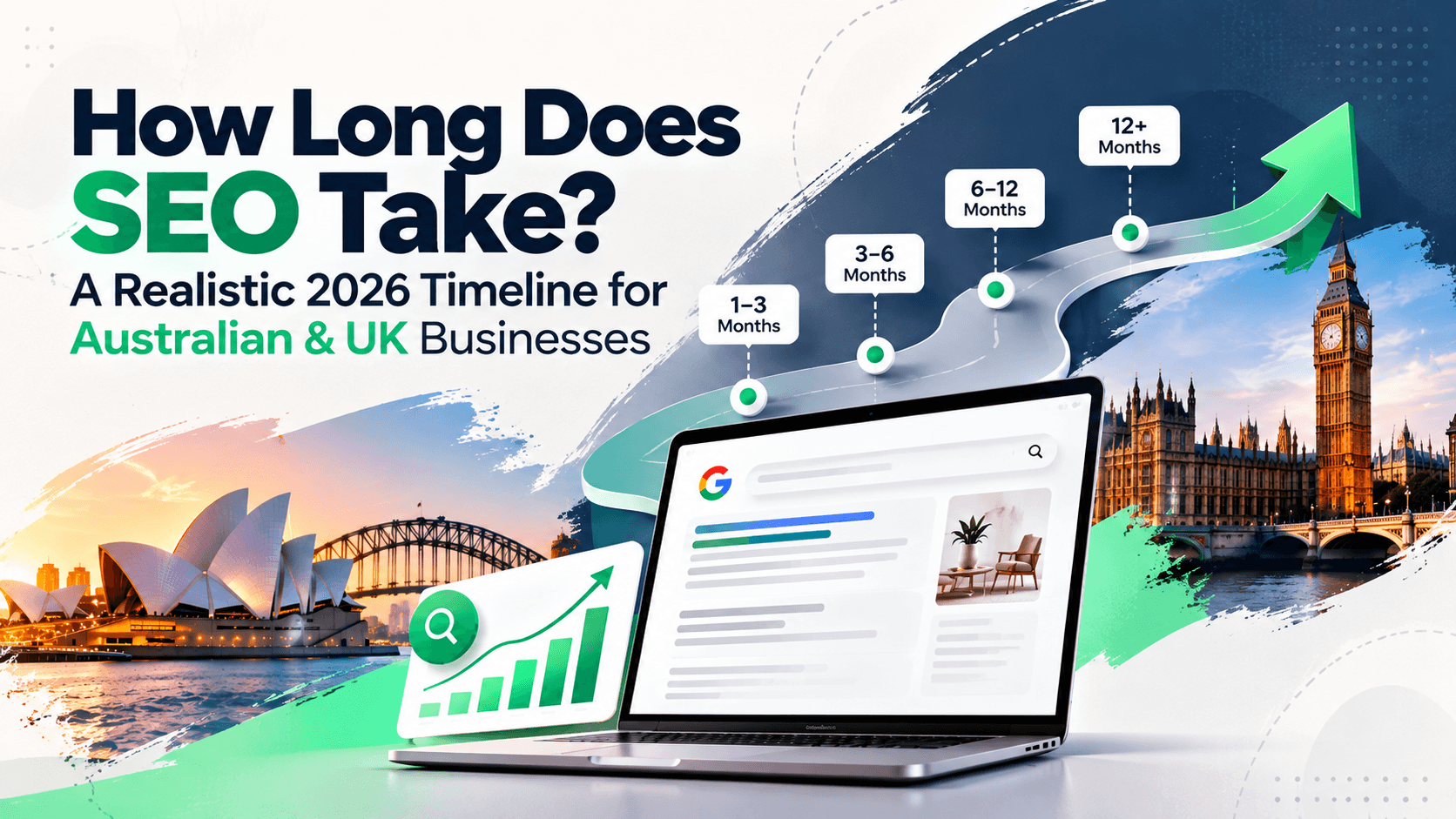
Local SEO is not instant. Most Melbourne and Sydney businesses start seeing meaningful movement in local rankings within 8–12 weeks of consistent work, with more substantial gains compounding over 6–12 months as citations, reviews, and content authority build up together.
Final Thoughts
Local SEO rewards consistency far more than any single quick fix. Businesses that treat their Google Business Profile, citations, and review generation as an ongoing discipline — rather than a one-off project — are the ones that dominate local search results in Melbourne and Sydney over the long run.
If your business currently isn't showing up in local map results for your core services, a technical and profile audit is usually the fastest way to identify exactly what's missing.
Want a free audit of your current local search visibility?
Get a Free Local SEO Audit →